10th Grade Math Help: What to Expect and How to Get Unstuck
By ADMIN | Updated on: October 2026
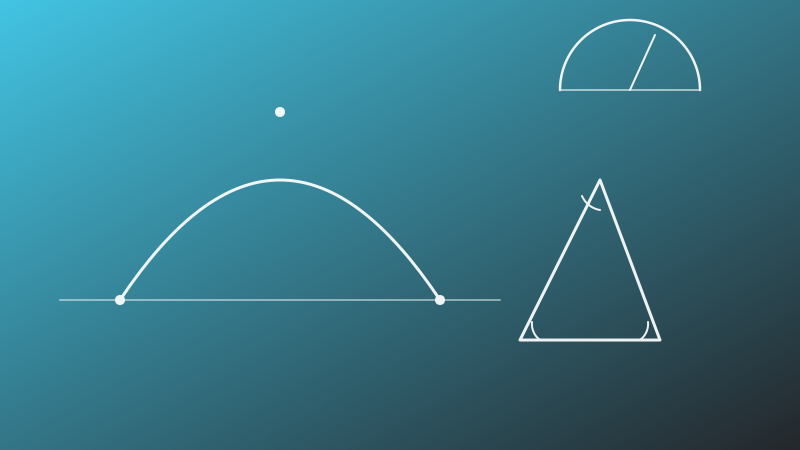
"10th grade math" isn't one class. Depending on your school, it's Geometry, Algebra 2, or Integrated Math 2. This guide covers what each one actually includes, why sophomore-year math feels like a jump, and how to get unstuck on a specific problem tonight.
Which math class is "10th grade math" at your school?
Most U.S. high schools use one of two sequences, and your 10th grade course depends on which one you're in.
Traditional sequence
Algebra 1 in 9th grade, then Geometry in 10th grade, then Algebra 2 in 11th grade. This is still the most common path, especially if you didn't take Algebra 1 in middle school.
Accelerated sequence
If you took Algebra 1 in 8th grade and Geometry in 9th grade, your 10th grade class is Algebra 2. Some students in this track also start Precalculus topics by the end of the year.
Integrated sequence
Some states and districts (California is a common example) use Integrated Math 1, 2, and 3 instead of separate Algebra and Geometry courses. Integrated Math 2 mixes algebra, geometry, and an introduction to statistics and probability into one course, usually taken in 10th grade.
If you're not sure which one you're in, check your course name on your schedule or report card. The content below covers Geometry and Algebra 2 specifically, since together they make up what almost every 10th grader studies, whatever the course is called.
What Geometry covers in 10th grade
Geometry is less about new arithmetic and more about a new way of arguing. You're proving that something is true, not just calculating a number.
Points, lines, angles, and proofs
You'll name angle pairs (complementary, supplementary, vertical), then use those relationships to build two-column or paragraph proofs. This is usually the first time math asks you to write a logical argument instead of solving for a variable.
Triangles and congruence
You'll learn the congruence shortcuts (SSS, SAS, ASA, AAS) and similarity rules (AA), plus the Pythagorean theorem and basic right-triangle trigonometry (sine, cosine, tangent).
Circles, area, and volume
Circumference, arc length, sector area, and the volume formulas for prisms, cylinders, cones, and spheres all show up here, usually tied to real measurement problems.
Coordinate geometry
You'll use the distance formula, midpoint formula, and slope to prove things about shapes placed on a coordinate grid, like showing a triangle is isosceles using only coordinates.
The hardest part of Geometry usually isn't the shapes. It's learning to write down why something is true in a way someone else can follow, step by step.
What Algebra 2 covers in 10th grade
Algebra 2 picks up where Algebra 1 left off and moves faster. If Algebra 1 skills are shaky, they get exposed quickly here.
Quadratics and polynomials
Factoring, completing the square, and the quadratic formula all return, now applied to more complex expressions, plus an introduction to polynomial functions of higher degree.
Functions and graphing
You'll study function notation, transformations (shifts, stretches, reflections), and compare linear, quadratic, exponential, and sometimes logarithmic functions side by side.
Systems and inequalities
Solving systems of equations and inequalities with two or more variables, often through word problems that ask you to set up the equations yourself, not just solve ones already written.
Rational and radical expressions
Simplifying, multiplying, and dividing expressions with fractions or square roots, including problems where you need to check for values that would make the expression undefined.
A quick walkthrough: one problem from each course
Seeing the reasoning laid out helps more than a definition does. Here's one short example from each course.
Geometry: a basic triangle proof
Say you're given that two triangles share a side, and two pairs of angles are marked congruent. The proof usually goes: (1) state the shared side is congruent to itself (the Reflexive Property), (2) list the two given angle pairs, (3) conclude the triangles are congruent by ASA. Each line needs a reason, not just a statement, which is the part students skip when they're rushing.
Algebra 2: factoring a quadratic
For x² + 5x + 6 = 0, you need two numbers that multiply to 6 and add to 5: that's 2 and 3. So it factors to (x + 2)(x + 3) = 0, giving x = -2 or x = -3. The most common mistake is dropping a negative sign when checking which factor pair adds to a negative middle term, so it's worth plugging both answers back into the original equation to confirm.
Why 10th grade math feels like a jump
Three things usually combine to make sophomore-year math harder than freshman-year math.
Abstract reasoning. Geometry proofs ask you to argue, not just calculate. That is a different skill, and it takes practice separate from arithmetic practice.
Speed. Algebra 2 covers more ground per unit than Algebra 1 did, so there's less time to fully master one skill before the next one builds on it.
Compounding gaps. Both courses lean heavily on prior skills: fraction and exponent rules, solving linear equations, basic shape properties. A shaky spot from 8th or 9th grade doesn't go away, it resurfaces at a worse time.
Study strategies that actually help
Generic advice like "study more" doesn't fix specific gaps. These are more targeted.
Diagnose before you drill. When a problem stumps you, figure out exactly which step broke, not just that you got it wrong. Was it the setup, a sign error, or an earlier skill like simplifying a fraction?
Practice proofs out loud. Saying a proof's logic in plain words before writing it in two columns makes the structure clearer, and it's easier to spot a missing step.
Space out practice. Ten minutes of mixed review most nights beats one long session before a test. Both Geometry and Algebra 2 reward spaced repetition because each unit depends on the last one.
Keep a running list of your own mistakes. A short page of "errors I keep making" (sign errors, forgetting to check both solutions, mislabeling an angle) is more useful than a stack of completed worksheets, because it tells you exactly what to double-check next time.
Ask for help before the test, not after. Teachers can usually clear up one confusing step in a five-minute conversation. Waiting until a grade comes back makes the same fix take much longer, since now you're also catching up on newer material.
Use a countdown for big tests. If you have a unit test or final coming up, a study planner that breaks the material into daily chunks (our Premium Countdown Planner does this) keeps review from turning into a last-minute cram.
Where AI homework help fits in
A free AI homework helper is most useful for 10th grade math when it explains a step rather than just stating an answer. Type or upload a Geometry proof or an Algebra 2 problem, and a step-by-step walkthrough can show exactly where your own approach went wrong.
Our Algebra Solver and Geometry Solver are built for this: they show the reasoning, not just the final number, so you can check your work or get unstuck on one specific step instead of redoing the whole problem from scratch. Premium adds Quiz Me and Practice Sets if you want extra reps on a topic you're still shaky on.
A quick note: AI can make mistakes, especially on multi-step proofs or unusual problem phrasing. Always double-check a surprising answer against your notes or textbook, and use AI help to understand the method, not to turn in work you didn't actually do.
Frequently asked questions
What math class do you take in 10th grade?
It depends on your school's sequence. If you took Algebra 1 in 9th grade, 10th grade is usually Geometry. If you took Geometry in 9th grade, 10th grade is usually Algebra 2. Schools using an Integrated Math sequence call it Integrated Math 2, which mixes algebra, geometry, and some statistics into one course.
Is 10th grade math harder than 9th grade math?
For most students, yes, because it asks for more abstract reasoning. Geometry introduces formal proofs, and Algebra 2 moves faster into quadratics, polynomials, and functions. Gaps from 9th grade tend to surface now, since both courses lean on earlier skills.
What are the hardest topics in 10th grade math?
In Geometry, two-column proofs and coordinate geometry trip up the most students. In Algebra 2, it's factoring quadratics, graphing functions, and word problems involving systems of equations. The shift from calculating an answer to explaining why it's true is usually the biggest adjustment.
Do colleges care about 10th grade math grades?
Yes. Your 10th grade transcript becomes part of the record colleges see later, and the course you take now often decides what you're placed into in 11th and 12th grade. A rough sophomore year in math can limit your options for Precalculus or AP Calculus later on.
How can AI help with 10th grade math homework?
A free AI homework helper can walk through a Geometry proof or Algebra 2 problem one step at a time instead of just giving the final answer, which helps you check your work or see exactly where a step went wrong. It works best as a study partner, not a way to skip the thinking.
What should I do if I'm behind in 10th grade math?
Start by pinpointing exactly which earlier skill is missing; 10th grade math usually exposes old gaps rather than creating brand-new problems. Use short daily practice instead of cramming, and ask your teacher for extra help early rather than after a test goes badly.
Is Geometry or Algebra 2 more important for the SAT and ACT?
Both matter. The SAT and ACT lean heavily on Algebra 1 and Algebra 2 skills (linear equations, quadratics, functions), with a smaller share of Geometry questions (area, angles, the Pythagorean theorem). Whichever course you're in during 10th grade, keeping those specific skills sharp pays off later.
Related reading: Algebra Homework Help and Geometry Lessons go deeper on each subject if you want a fuller breakdown of one course specifically. For how the two sequences connect to Precalculus and beyond, Khan Academy's Algebra 2 course and Geometry course are free and line up closely with most U.S. curricula.